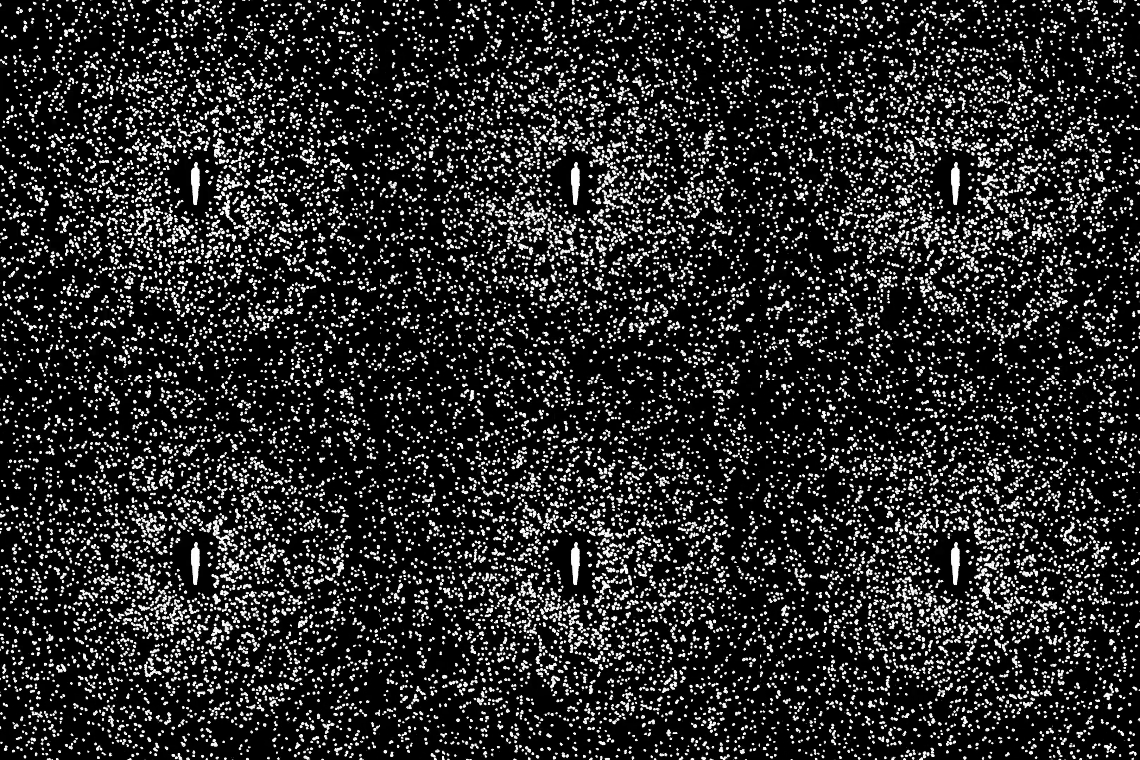
Digital Doubles
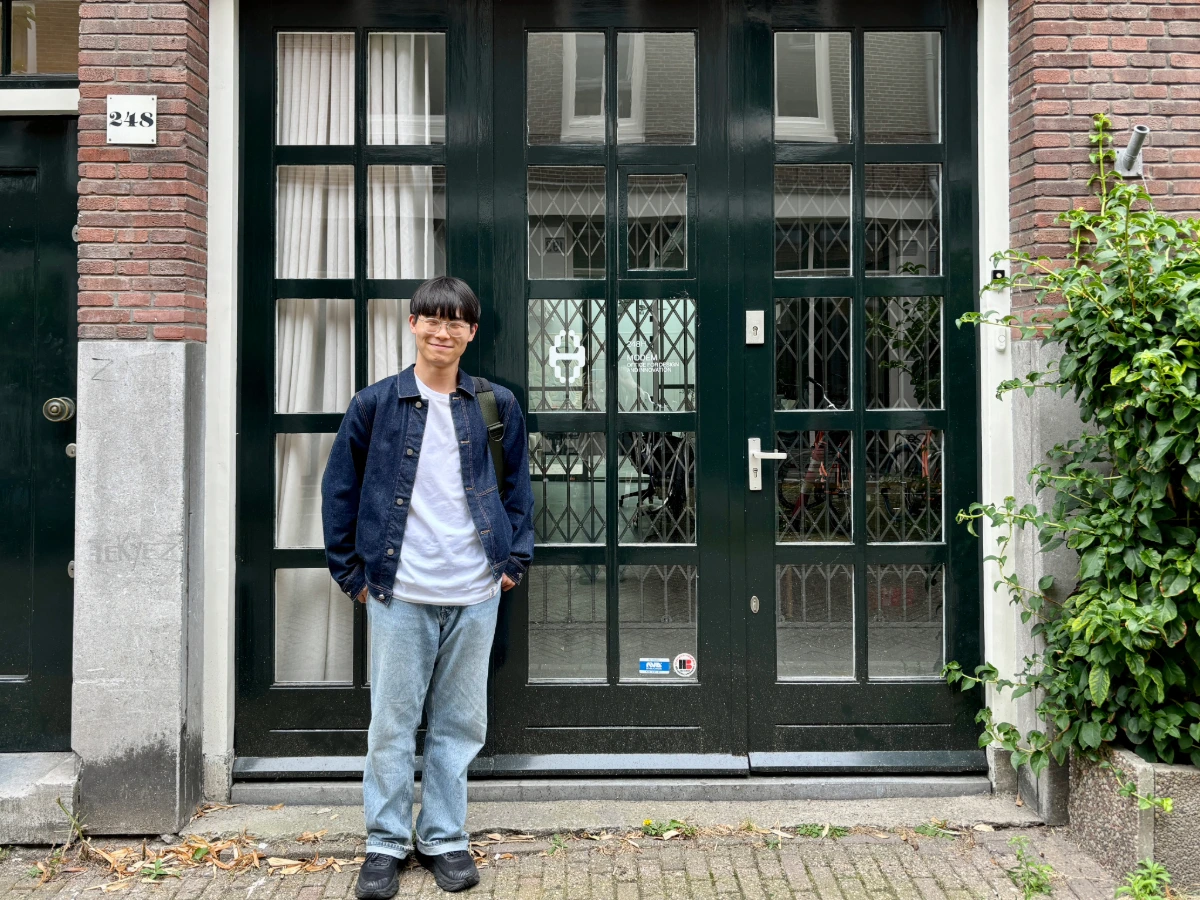
Trained on our most intimate data, the next generation of AI models will be deeply personal. Modem collaborated with Chanwoo Lee, HCI designer at the Royal College of Art, to explore how our identities evolve when lifelike simulations begin to communicate on our behalf.
Digital Doubles imagines a future where our avatars become agents—extending our virtual presence into the uncanny valley and beyond.
The Augmented Self
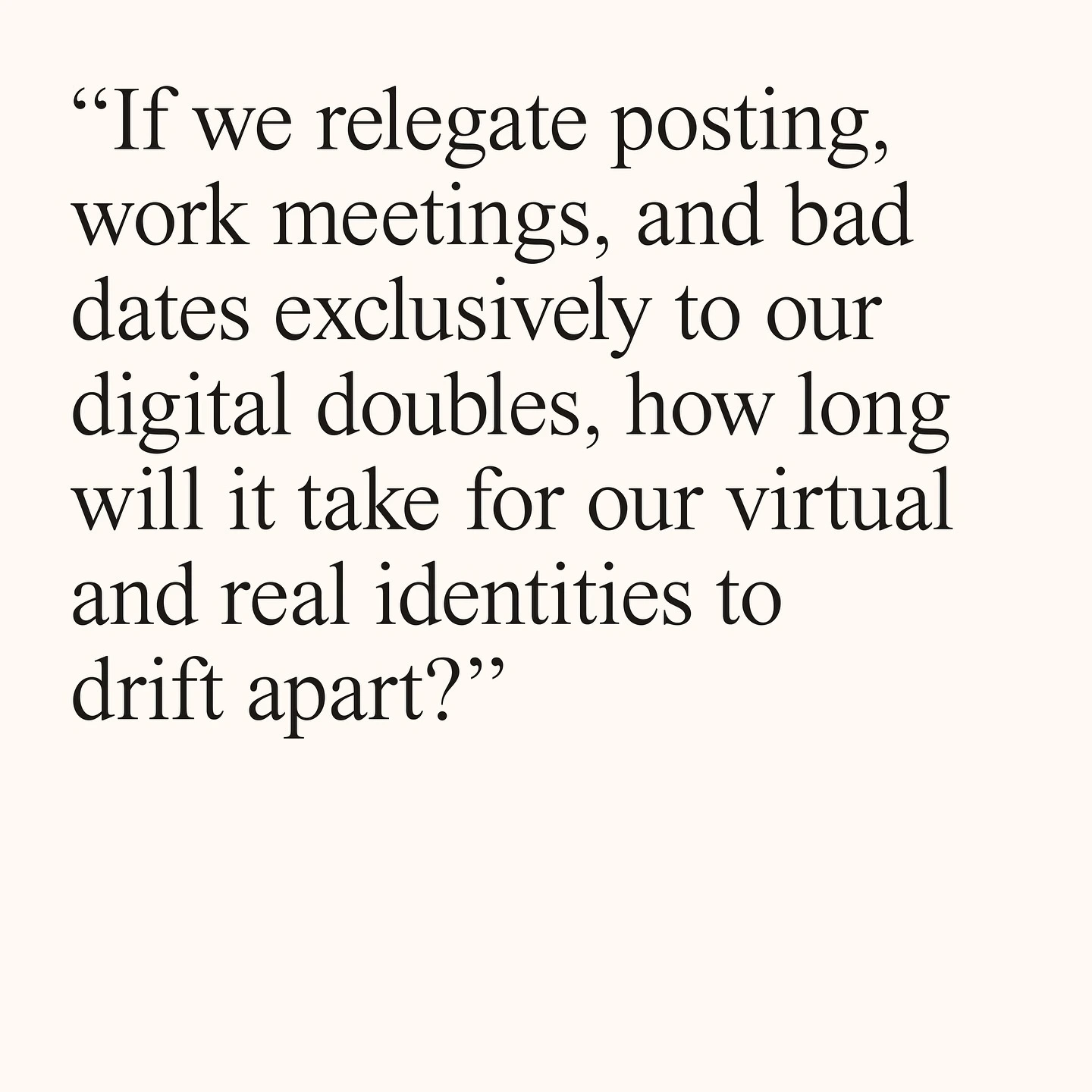
The promise of these technologies is that they will automate away the mundane busywork. Someday, digital doubles may even attend meetings on our behalf. But their seemingly contradictory predictions beg the question: in the future, will we automate work in order to focus on our personal lives, or will we automate our personal lives so that we can spend more at work?
The Perceived Self
For the time being, our digital doubles sit squarely in the uncanny valley. Soon it will be impossible to distinguish between a human and their digital agent, throwing nearly all online interactions further into a miasma of deniability and distrust. This raises the question: what happens to our digital doubles after we die? Digital doubles are not an extension of consciousness, and it’s unlikely they ever will be. But in practical terms, it won’t matter whether a digital double is conscious—only that people interact with it as though it were.
The Predictive Self
A second self is a kind of mirror, after all—and given enough personal data, that mirror could become a crystal ball. Soon, thoughtful queries to a digital double might help to identify our blind spots and cognitive biases. Of course, the usefulness of a digital double depends on its fidelity to the real thing. AI models can only generate responses based on their training datasets—which are, by nature, archives. But how a person behaves in the future is rarely a linear extrapolation of their past experience. We often surprise ourselves. We are, after all, singular.
(Royal College of Art)